I turn the calls, tickets, demos, and edge cases into one buildable path.

Elijah Paul
I turn customer problems into AI products people can use.
I work with crypto, fintech, voice AI, creator-protection, and venture teams when customers or operators are stuck in a workflow worth fixing. I map the work, design the product, build the first usable version, and show what is real, what is assumed, and what still needs approval.
The problems I am hired to fix.
If the team can feel the opportunity but cannot turn it into a clear product, this is where I help.
I design the screen, flow, controls, and handoff that make the idea usable.
I translate the market signal into scope, proof, risks, and the first version.
I keep the human review points, limits, and failure states visible.
Hire me to find the product, build it, or lead the work.
Use a sprint when you need clarity, a build when the problem is already selected, or an embedded role when customer discovery and delivery need one owner.
Find the product worth building
AI Product Opportunity Sprint
Typical range: $3.5k-$7.5k
Find the customer or operations problem worth building before the team spends weeks on the wrong thing.
- Best when
- Customers or operators keep asking for something, but no one has turned it into a clear product and build plan.
- You get
- You get the buyer, workflow, first screen, build plan, risks, and a build/hold/stop recommendation.
- Timeline
- 5-10 business days
Ship the first useful version
AI Product Build
Typical range: $15k-$40k+
Turn the selected workflow into a working product people can test, including the screens, logic, controls, and required integrations.
- Best when
- The problem is real and you need a working screen, agent, or prototype before committing to a larger build.
- You get
- You get the product surface, core logic, controls, review points, and handoff your team can test.
- Timeline
- 3-8 weeks
Add product judgment to the team
Embedded AI Solutions Architect
Typical range: $10k-$18k/month
Work with customers, product, sales, and engineering to find the gap, shape the product, and keep the build moving.
- Best when
- Customers, product, sales, and engineering all see the problem differently and the build needs a clear owner.
- You get
- You get customer discovery, product shaping, prototypes, technical planning, implementation support, and feedback loops.
- Timeline
- Monthly engagement
I build usable products for workflows where money, identity, reputation, infrastructure, or customer demand make the details matter.
My background has helped me uniquely design and build systems that turn high-stakes workflows into valuable products for buyers, operators, and developers alike.
Voice intake and creator-protection workflows that turn calls, releases, evidence, and next steps into a product surface.
A system for deciding what should be built, held, or killed before engineering time gets spent.
Financial workflows, payment checks, human approval, and release safety where the boundary matters.
Compute planning before teams commit spend, provider work, or deployment decisions.
Start with the work, not the claim.
Pick the problem closest to yours. Each example shows what I built, who it helps, what exists today, and what I will not overclaim.
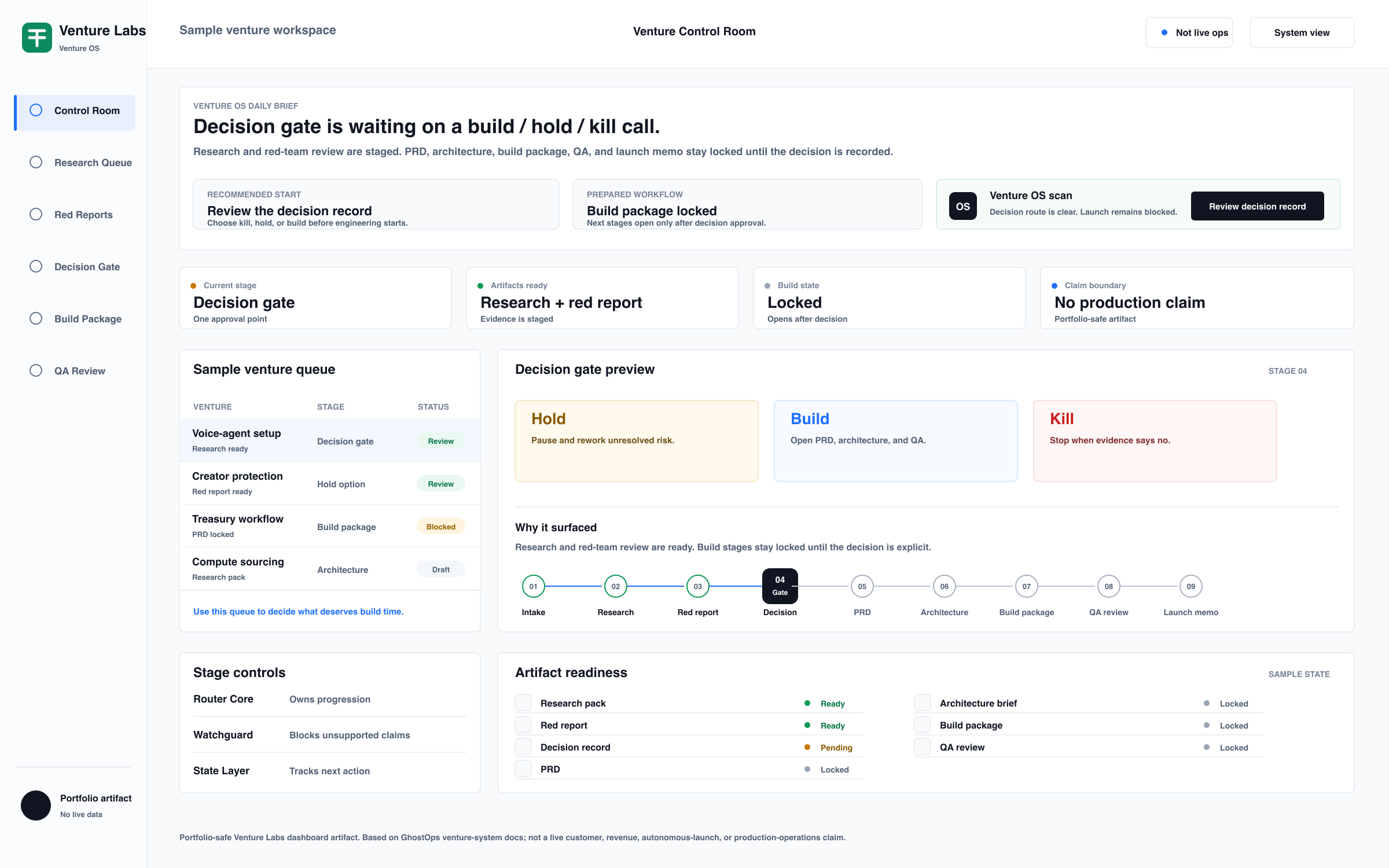
Venture Labs: decide what deserves engineering time before you build.
Founders and teams waste weeks when every idea sounds promising. Venture Labs forces each idea through research, risk review, a build/hold/kill decision, and the handoff engineering needs next.
What it is
A control-room concept for teams with too many product ideas and no strict way to decide what moves forward.
Use case
Venture review, product validation, pre-build planning, AI workflow design, and launch readiness.
Who it helps
Founders, venture studios, AI teams, operators, and product leaders with more ideas than engineering capacity.
My role
Designed the stage model, review roles, state layer, work-product requirements, decision gates, QA controls, and public dashboard concept.
What exists today
Shows how I turn a crowded idea queue into a decision path with stages, evidence, approval gates, QA, and a hard stop when the idea does not deserve engineering time.
Why it matters
- Prevents expensive build work from starting until research, red-team review, and a decision record exist.
- Shows how agent roles, state, evidence, QA, and approval gates work together before engineering starts.
- Turns startup ideas into work a founder, investor, operator, or engineering team can inspect before funding the build.
What I am not claiming
The Venture Labs control room is an illustrative concept based on internal GhostOps system docs. It is not a live production dashboard, customer result, revenue claim, autonomous startup launch claim, or proof that every stage has been automated.
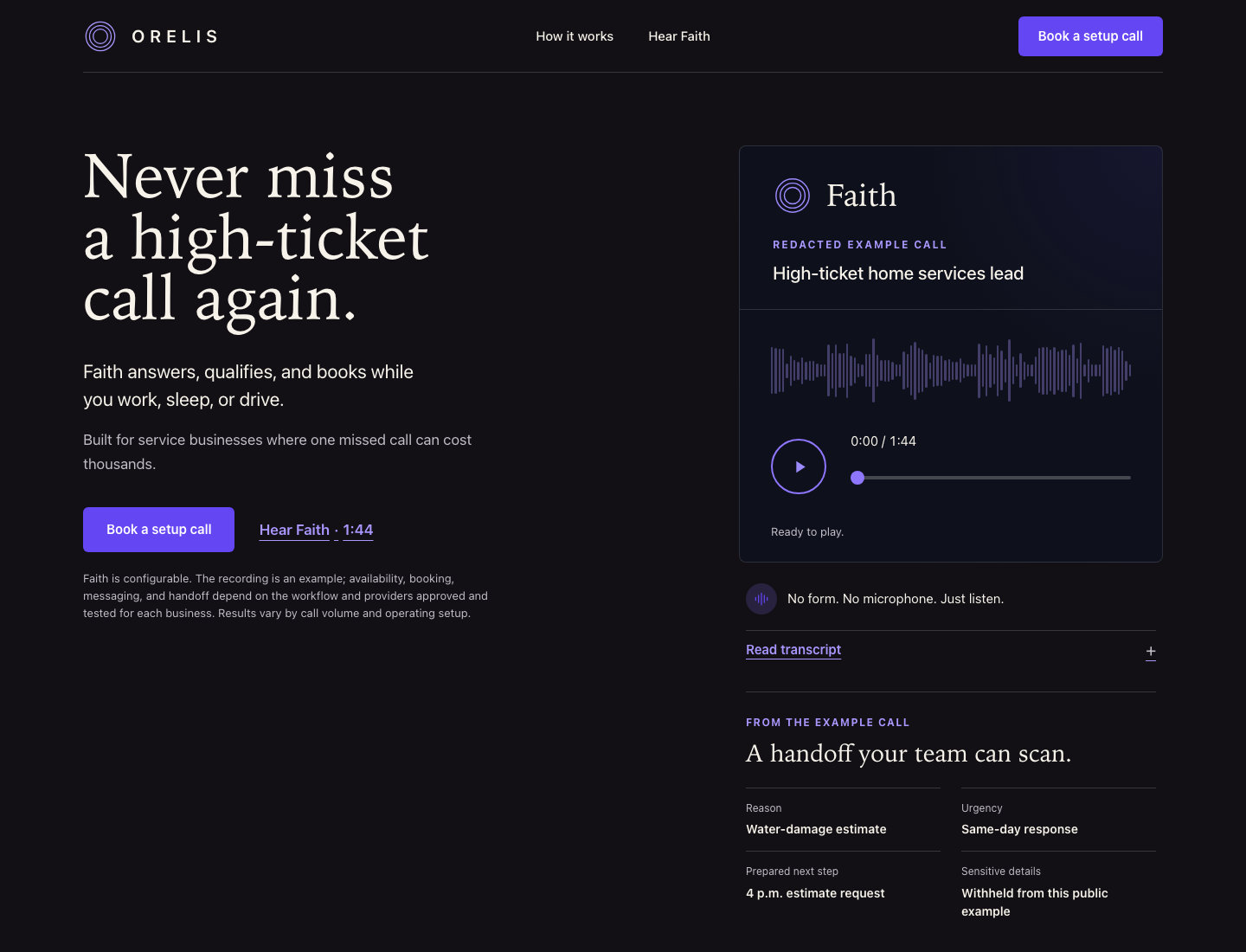
Orelis: stop letting qualified calls die in voicemail.
Faith answers missed and after-hours calls, asks the right questions, and gives the operator a usable handoff.
What it is
A voice-agent product for service businesses that cannot afford to let serious calls turn into voicemail.
Use case
Missed calls, overflow, after-hours requests, intake routing, and service qualification.
Who it helps
High-ticket service businesses, local operators, clinics, agencies, home services, and sales teams where one missed call can matter.
My role
Product positioning, conversation workflow, service-business use case, brand direction, UX, demo experience, and commercial packaging.
What exists today
Turns missed-call risk into a clear intake, qualification, and handoff workflow that a service business can evaluate from a real example call.
Why it matters
- Captures high-intent inbound demand when the team cannot answer.
- Keeps qualification, urgency, and next-step details consistent.
- Gives operators a scan-ready handoff instead of a vague voicemail.
What I am not claiming
Orelis is a public commercial demo. Production telephony, CRM integrations, uptime, booking behavior, and customer outcomes depend on the final provider setup and tested workflow.
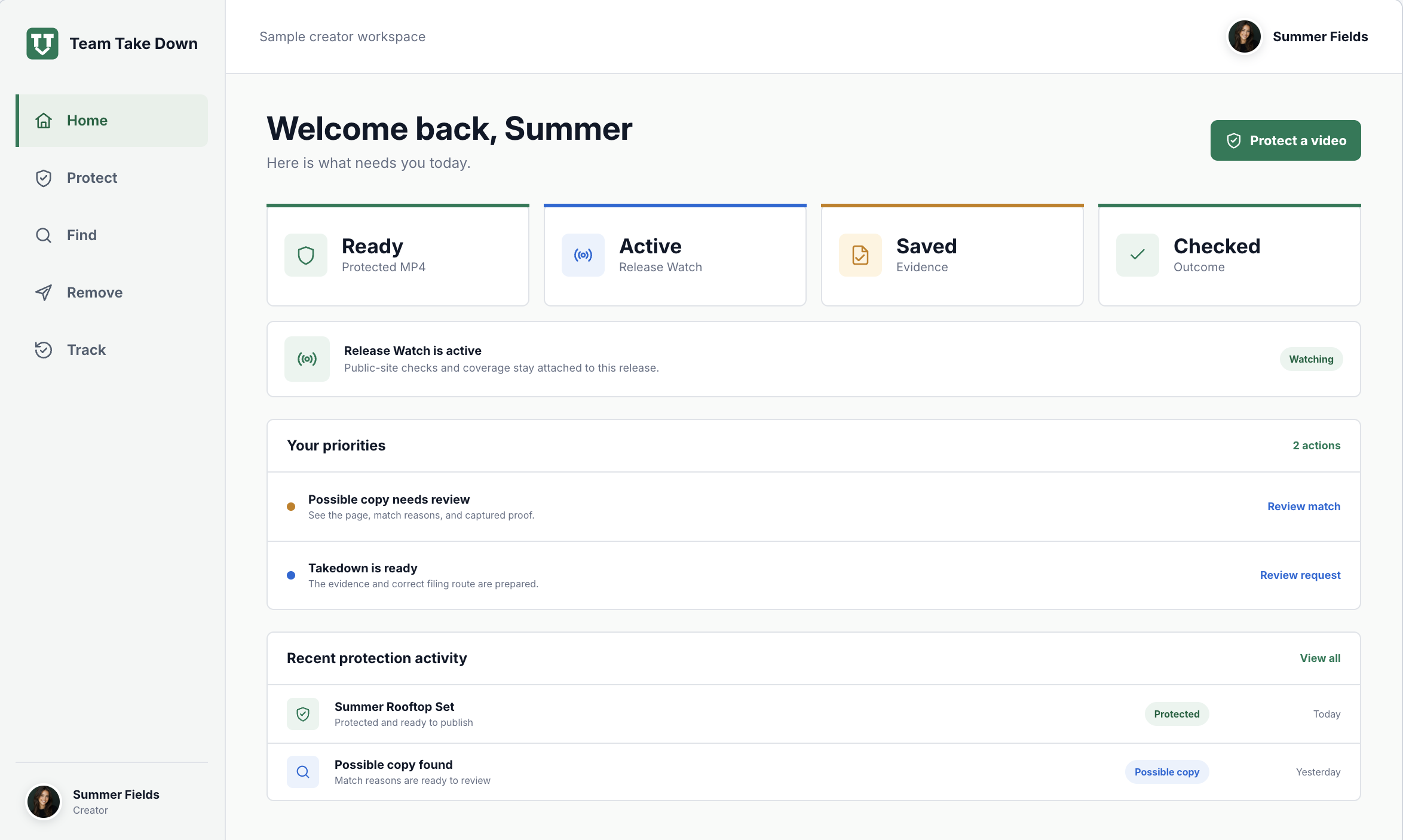
Team Take Down: protect creator media before copies spread.
It prepares the release, watches public sites, saves evidence, and keeps the creator in control before any request is sent.
What it is
A creator protection platform for people whose video or audio can be copied, impersonated, or re-uploaded.
Use case
Protect a release, monitor accessible public sites, collect proof, prepare takedown requests, and track outcomes.
Who it helps
Creators, talent managers, agencies, and rights teams with high-value video or audio releases.
My role
Product strategy, creator workflow, privacy boundary, evidence model, dashboard UX, release positioning, and launch planning.
What exists today
Turns leak cleanup into one controlled workspace from protected upload to evidence, creator approval, takedown support, and checked result.
Why it matters
- Protects releases before they go public instead of reacting after proof is scattered.
- Keeps match reasons, screenshots, filing routes, receipts, and outcomes in one place.
- Keeps the creator in control of the final legal approval before any request is sent.
What I am not claiming
Team Take Down watches public sites it can legally access. It does not search private groups, locked accounts, paywalls, encrypted services, or the whole internet, and it does not guarantee every edited copy will be found or removed.
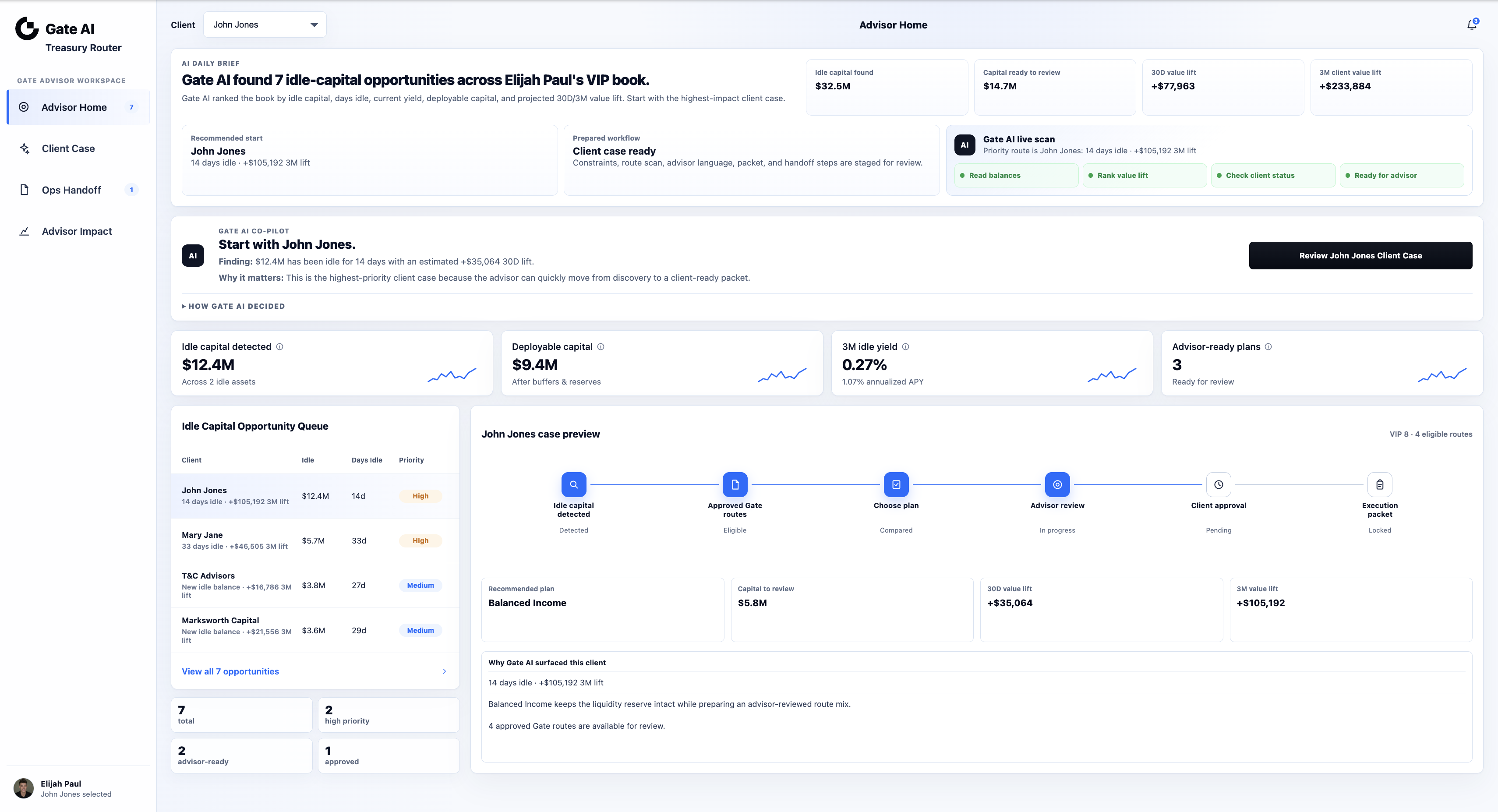
Treasury Router: turn idle capital into a client-ready review.
The dashboard finds the next account to review, explains the route, and keeps execution behind human approval.
What it is
A governed advisor prototype for ranking modeled idle-capital opportunities and preparing client review packets.
Use case
Portfolio review, treasury routing, advisor prioritization, client approval, and operations handoff.
Who it helps
Fintech, wealth, crypto treasury, and advisor teams that need controlled AI workflows with clear boundaries.
My role
Product strategy, workflow design, UX/UI, recommendation architecture, report design, prototyping, and x402 testnet implementation.
What exists today
Turns an AI financial workflow idea into a working advisor surface that stakeholders can inspect, test, and discuss without giving the AI authority over funds.
Why it matters
- Shows advisors which client case deserves attention first.
- Turns route analysis into a packet a human can review with the client.
- Protects the workflow with deterministic controls and explicit execution boundaries.
What I am not claiming
Built while working with Gate AI. The public material shows a working prototype using deterministic development data. It does not use live client funds, a live Gate execution API, or autonomous execution.
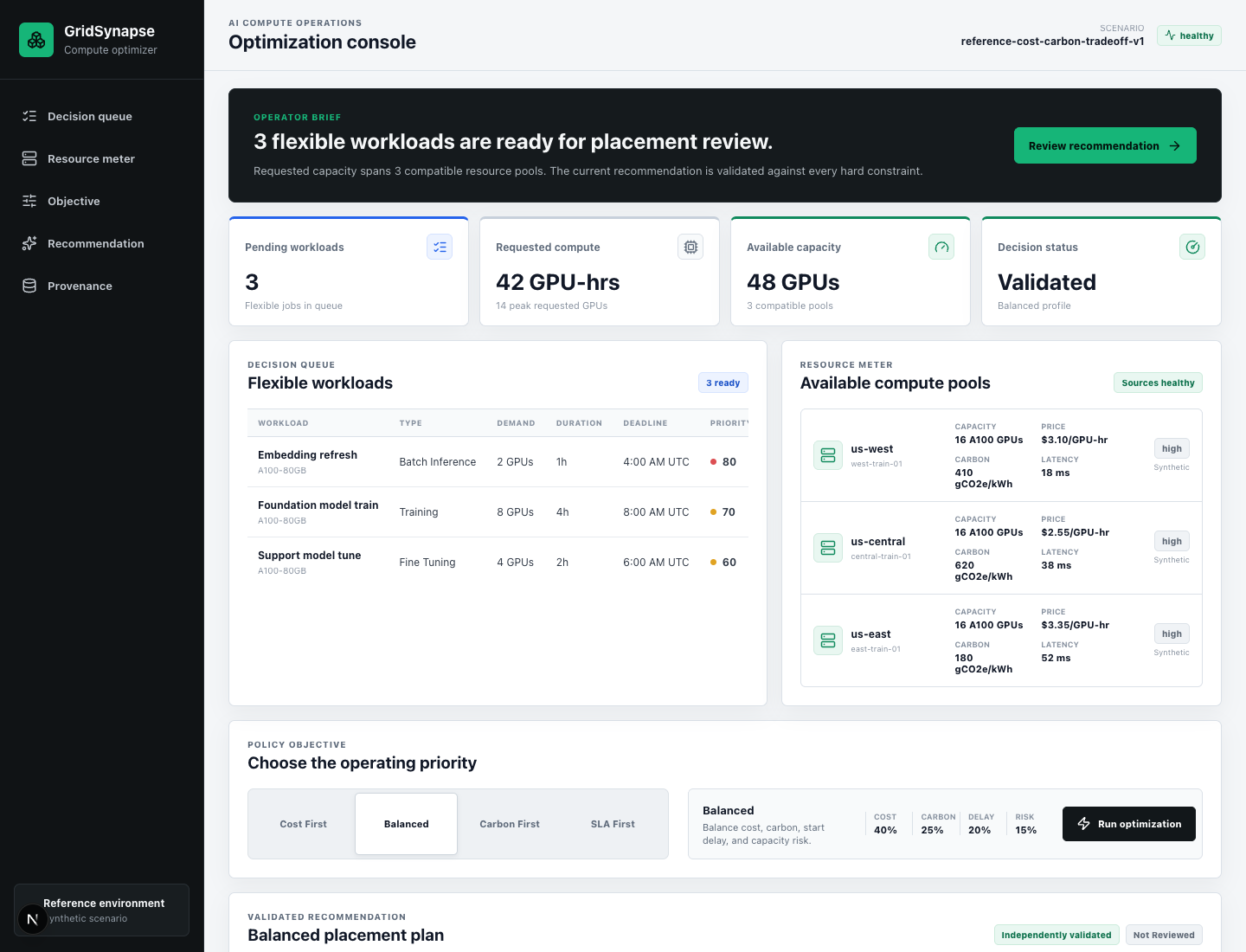
GridSynapse: compare GPU options without rebuilding the spreadsheet.
It compares cost, region, carbon, policy, and workload tradeoffs before the team commits spend.
What it is
A compute planning workflow that turns scattered provider information into a ranked shortlist a team can review.
Use case
GPU sourcing, AI workload planning, procurement comparison, budget review, and deployment planning.
Who it helps
AI teams, infrastructure buyers, procurement leads, and founders trying to buy compute without spreadsheet drift.
My role
Product direction, information architecture, procurement workflow, optimization requirements, UX/UI, data-source integration, and release controls.
What exists today
Demonstrates how live public inputs, deterministic optimization, and operational approvals can replace spreadsheet-heavy compute sourcing.
Why it matters
- Helps buyers compare providers without relying on scattered spreadsheets.
- Makes the tradeoff between cost, region, policy, carbon, and workload visible.
- Prepares the review packet before any reservation, provisioning, or spend.
What I am not claiming
GridSynapse uses public pricing and carbon inputs. Capacity, latency, and availability are modeled. It does not discover guaranteed inventory, reserve GPUs, provision infrastructure, or spend money.
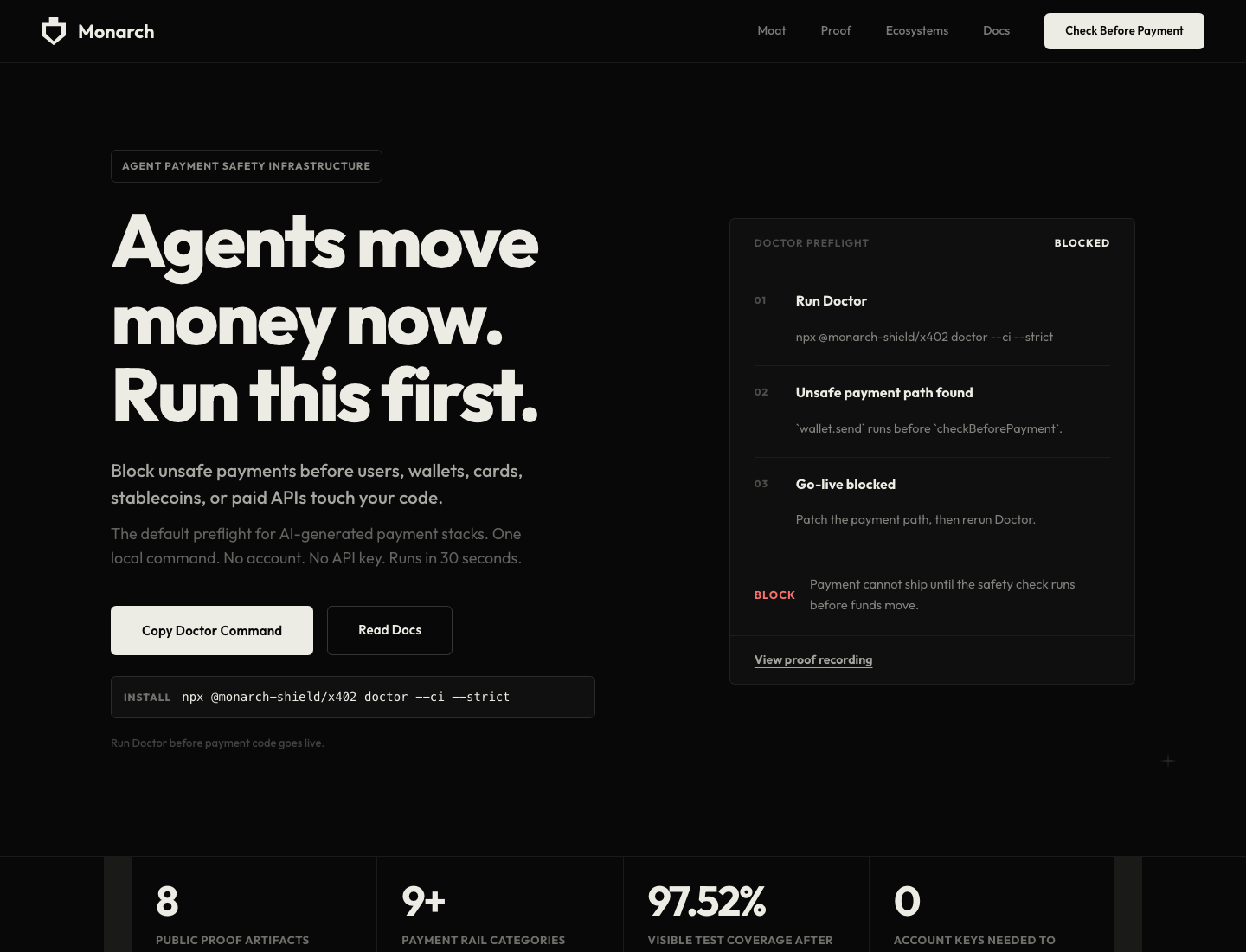
Monarch Shield: catch unsafe agent-payment paths before money moves.
It gives developers a local preflight for payment code before real funds can move.
What it is
An open-source safety check for developers building x402, wallet, stablecoin, card, paid API, or paid MCP flows.
Use case
Pre-release payment review, CI blocking, policy guard checks, and reproducible proof packs.
Who it helps
Developers, coding-agent teams, protocol builders, and startups shipping agent-payment workflows.
My role
Product wedge, developer workflow, policy-guard model, CLI experience, CI behavior, testing, documentation, and public release.
What exists today
Turns agent-payment release risk into a deterministic preflight developers and coding agents can run before real funds move.
Why it matters
- Fails strict checks when supported payment code lacks the expected guard before release.
- Gives reviewers reproducible proof packs instead of vague security claims.
- Works locally without an account, API key, or hosted dependency to start.
What I am not claiming
Monarch Shield is a build-time and CI preflight. It is not runtime enforcement by itself, fraud prevention, provider verification, wallet security, regulatory compliance, or settlement validation.
How I work
I start where the work breaks, build the first version people can use, and keep the trust points visible.
- Find the stuck handoff
I start with the call, ticket, spreadsheet, approval, or source system where the work breaks.
The buyer, user, problem, and first screen are clear. - Design the product flow
I map the rules, edge cases, data sources, approvals, and failure states into a flow a real user can follow.
Scope, risks, and handoffs are visible before the build. - Build the first testable version
I build the screen, dashboard, voice flow, CLI check, or prototype far enough for a buyer or operator to use.
You can decide to sell, fund, expand, integrate, or stop.
Have a stuck workflow that should become a product?
Tell me the customer problem, current workaround, product idea, or role you need filled. I will reply with where I can help, what I would check first, and which engagement fits.
Include four details.
- What customer or internal workflow is stuck?
- Who needs to use or approve the first working version?
- What source system, policy, or integration creates the hard part?
- What proof would make the next decision easier?