Compute planning
GridSynapse
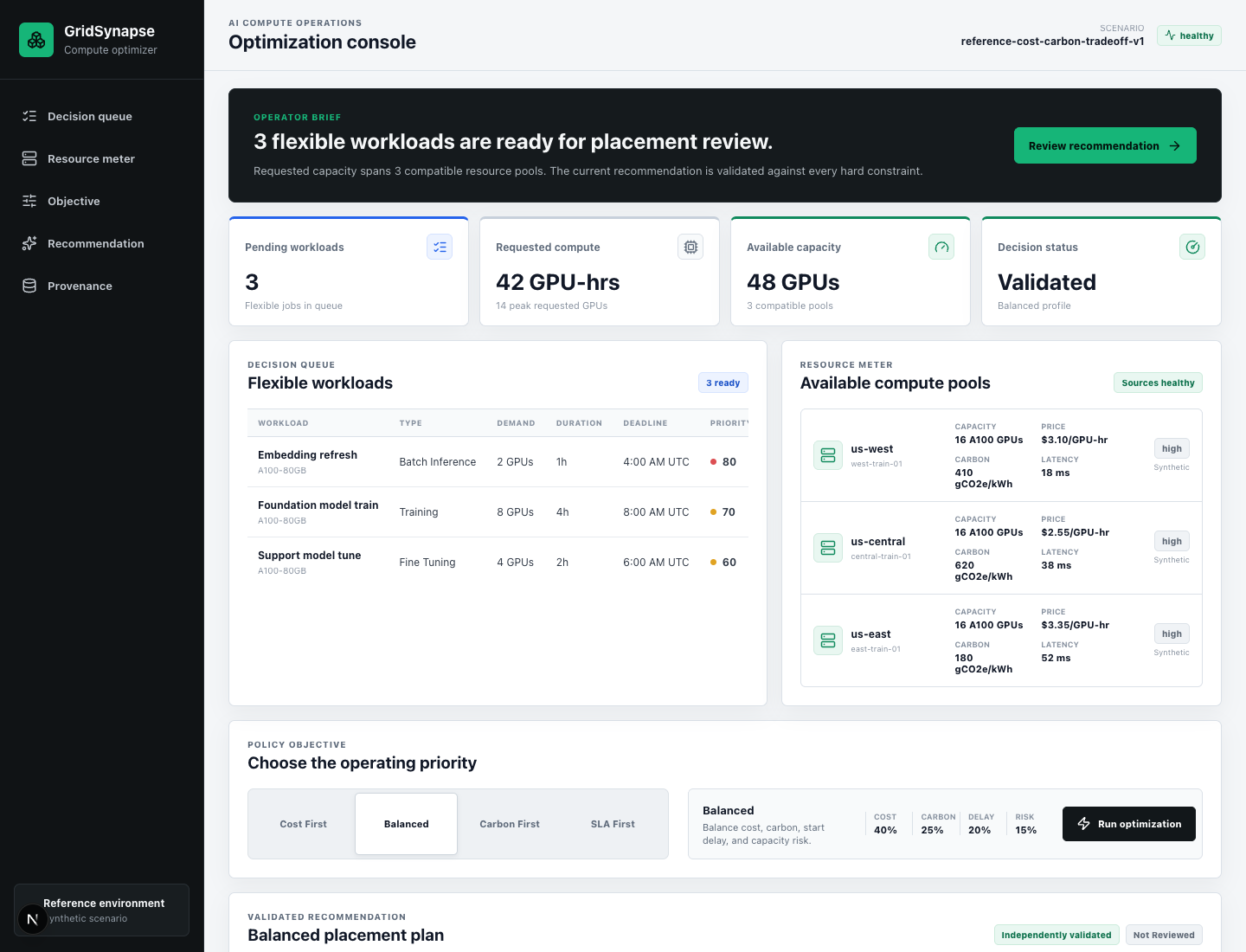
A buyer-side compute planning workflow that compares public GPU pricing and carbon inputs, applies workload constraints, and gives teams a ranked shortlist before they buy.
The customer problem
Compute buyers need to compare fragmented provider options against cost, carbon, workload, region, and policy constraints without treating modeled capacity as guaranteed inventory.
Demonstrates how live public inputs, deterministic optimization, and operational approvals can replace spreadsheet-heavy compute sourcing.
What I built
A product workflow that makes the next decision clearer.
- Normalized public provider catalog inputs into a comparable decision model.
- Used deterministic optimization instead of opaque AI allocation decisions.
- Separated measured public inputs from modeled capacity, latency, and availability.
- Created a spend-capped review packet and SkyPilot artifact before any provider action.
Working flow
From input to controlled action
- Define workload and policy constraints
- Compare public price and carbon inputs
- Validate the ranked recommendation
- Prepare procurement and deployment artifacts
- Record the decision without reserving or purchasing resources
Inspectable evidence
What works in the current build
- Publicly inspectable repository and working web product
- Public catalog pricing and UK carbon-intensity inputs
- Deterministic OR-Tools recommendation engine
- Supabase-backed decision history with preview write protection
Operating boundary
What this case study does and does not claim
GridSynapse uses public pricing and carbon inputs. Capacity, latency, and availability are modeled. It does not discover guaranteed inventory, reserve GPUs, provision infrastructure, or spend money.
Available as a portfolio product foundation for product partnerships, custom implementation discussions, or acquisition inquiries.
Relevant problem?
Build the version your customers can actually test.
Share the current workflow, user, and business constraint. I will tell you where I would start.
Discuss a related build